Wednesday, April 17, 2013

Weather and Climate Changes.

The Graph above shoes the average temperature as well as precipitation throughout the whole year.

Fiji island is overall a warm tropical climate perfect for a holiday get away with wonderful beachside views. Since Fiji Island is located in the southern Hemisphere, so what’s considered “Summer” lasts fro November to April and “Winter” is from April to September. However, between the two different seasons there aren’t much difference in Temperature.

Wet Season in the Fiji Island:
The wet season in the Fiji Island can be very hot with temperature reaching up to 88 degrees as well as very humid. This wet season is from November thought April which is also known as typhoon season. During these months rain occurs none stop but is usually followed by sunshine.
Typhoons usually hit Fiji Island from January till March.

Dry Season in the Fiji Island:
Dry season occurs between the months of May and October, during this time the weather is dry and temperatures ranges from 79-86 degree Fahrenheit. The dry season is also considered “high season” where Fiji gets majority of their visitors. During this dry season it is in fact the most beautiful time of the year to travel and get away on a vacation. Price of airline tickets hit their peak filled with visitors from all over the world especially from New Zealand and Australia, who hop over islands to get away from their winter weather back at home to the beautiful weather in the Fijis.
Beautiful view of one of Fiji Island's as well as their underwater soft coral, technicolor fish and reef in March during their Dry Season.
Sources:
Source 1
Source 2


Tuesday, March 12, 2013

Soil of Fiji Island


This is the color of Oxisol
soil with high concentration
iron (III), aluminiumoxides
and hydroxides

The Fiji Islands is commonly known as a vacation spot as well a very tropical island. Aside from the beautiful beach and amazing resorts, Fiji is divided up into three major classes of landforms: plains; low mountains and hills and high mountains. Lowland soils are usually below 600m with an average temperature over 71 degrees Fahrenheit. The soils in this particular region are formed usually formed on beach sand. Also, in this particular area, the soil can be very oxisol, which means that the soil contains high concentration of iron (III), aluminiumoxides and hydroxides. This process is called lateralization which is a great amount of aluminum and ferric hydroxides which then creates a reddish or a yellowish color way.


A small village in Suva, Fiji that shows the type of poverty they're in.

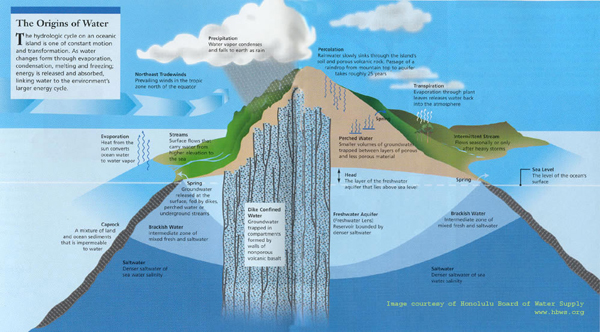
Having such oxisol soil obviously contains a lack of nutrients in this certain region of the island, however in addition to oxisol soil, erosion of land in Fiji has been a big problem over the years. In fact, business executive Lautoka and community worker Peter Drysdale says “The rate of soil erosion in the hills behind western town were the real causes of poverty, there was a connection between soil erosion, floods, dry season, crop yields and poverty.” The main island of Fiji is Viti Levu. Viti Levu is actually big enough to have two different climates on one different side of the island. In fact, the climate in Viti Levu is so unique its called the “Water Cycle of Fiji.” The mountains on Viti Levu are located towards the center of the island and evaporation happens on the West side of the mountain, then transporting to the East side of the island for precipitation. However, with this particular process after precipitation is processed and run off towards the west side of the island, everything starts becoming dryer and dryer. 

This water cycle is a representation of the water cycle at Fiji. The west side of the island is dryed off because of
all the precipitation that happened in the east side of the island.

Sources: 


Tuesday, February 19, 2013

Volcanism in the islands


The exact Geographical coordinates of Fiji Island are 18 00 S, 176 00 E.  and the exact total land area is 18,270sq. km. Fiji is located on the Fiji plate on the plate boundary of Australian as well as the pacific plate. Across the Pacific Ocean, the pacific plate subduct under most plates such as South America, North America, Asia, and now it subducts right under the Australian Plate. As the Pacific Plate subducts under the Australian Plate the layer of the earth get crushed down while magma rises up through the mantle and crush which forms underwater seamounts as well as making the volcanoes bigger over time. So with out the subduction of the Pacific plate under the Australian plate there wouldn’t be no Fiji, no diving and no beautiful coral reefs.


Koro is one of Fiji’s very well known volcanos that is a basaltic cinder cones which runs North and South of the island. Koro is a chain of basaltic cinder cones that haven’t been erupted since 10,000 years ago. The population by Koro is estimated at 5000 people with as few as 14 villages. Other than just Koro there are many other popular volcanos in the Fiji islands worth studying and taking a closer look at such as the Taveuni which a shield volcano and also the Nabukelevu which is known as the lava domes.

Sources: 


Wednesday, January 30, 2013

Introduction


Welcome to Fiji Islands. My name is Kevin Sy and I am your blog host. I am currently a student at the University of Colorado in Denver and progressing in pursuing my Finance degree. The location I've picked out is called Fiji Islands. Even though there are millions of different places I could pick on the face of the Earth, I picked Fiji with many unique reasons. One of the main reasons why I chose Fiji Islands is because of how beautiful the environment truly is and how much I would rather to live there. In another word, if I could pick any where else to live in the world it would definitely be Fiji Islands. I prefer the tropical environment and being around an ocean.
 
Aside from Fiji Islands being such a beautiful place as it is, Fiji Islands seems very interesting to me as a place to pick as my location as well as me doing more research on. Therefore, after this course is over I plan on learning a lot more about Fiji Islands from the geographic standpoint as well as the country as a whole standpoint. Fiji Islands also grabbed a lot of my attention by being exactly where and how it’s on a map. Fiji Islands ’ location on a map is significantly different than most other countries. Locating in the south pacific Fiji is group of volcano active islands which is right off the shore of Australia . Being in such a considerable area, the weather is incredible and the climate is tropical marine which is the best climate there ever is. Being born and raised in the country of Vietnam and growing up around the tropical region, it would be my ideal dream home to be located at Fiji Islands .
  

Sources: 
Photo 1
Photo 2
Photo 3